
[Solved]Chapter 14 Discussed Fact Designers Web Content Often Reason Ex Plicitly Create Pages Scor Q37191381
In Chapter 14, we discussed the fact that designers of Webcontent often reason ex-plicitly about how to create pages that will score highly onsearch engine rankings. Ina scaled-down setting, this question explores some reasoningin that style.
a) Show the values that you get if you run two rounds ofcomputing hub and authorityvalues on the network of Web pages in Figure 14.18. (That is,the values computed bythe k-step hub-authority computation when we choose the numberof steps k to be 2.)Show the values both before and after the final normalizationstep, in which we divideeach authority score by the sum of all authority scores, anddivide each hub score bythe sum of all hub scores. (We will call the scores obtainedafter this dividing-downstep the normalized scores. It’s fine to write the normalizedscores as fractions ratherthan decimals.)
b) Now we come to the issue of creating pages so as to achievelarge authority scores,given an existing hyperlink structure.In particular, suppose you wanted to create a new Web page X,and add it to thenetwork in Figure 14.18, so that it could achieve a(normalized) authority score thatis as large as possible. One thing you might try is to createa second page Y as well,so that Y links to X and thus confers authority on it. Indoing this, it’s natural towonder whether it helps or hurts X’s authority to have Y linkto other nodes as well.Specifically, suppose you add X and Y to the network in Figure14.18. In order to addX and Y to this network, one needs to specify what links theywill have. Here are twooptions; in the first option, Y links only to X, while in thesecond option, Y links toother strong authorities in addition to X.• Option 1: Add new nodes X and Y to Figure 14.18; create asingle link from Yto X; create no links out of X.• Option 2: Add new nodes X and Y to Figure 14.18; createlinks from Y to eachof A, B, and X; create no links out of X.For each of these two options, we’d like to know how X faresin terms of its authorityscore. So, for each option, show the normalized authorityvalues that each of A, B, andX get when you run the 2-step hub-authority computation on theresulting network(as in part (a)). (That is, you should perform thenormalization step where you divideeach authority value down by the total.)For which of Options 1 or 2 does page X get a higher authorityscore (taking normal-ization into account)? Give a brief explanation in which youprovide some intuitionfor why this option gives X a higher score.(c) Suppose instead of creating two pages, you create threepages X, Y , and Z, andagain try to strategically create links out of them so that Xgets ranked as well aspossible.Describe a strategy for adding three nodes X, Y , and Z to thenetwork in Figure 14.18,with choices of links out of each, so that when you run the2-step hub-authority com-putation (as in parts (a) and (b)), and then rank all pages bytheir authority score,node X shows up in second place.(Note that there’s no way to do this so that X shows up infirst place, so second placeis the best one can hope for using only three nodes X, Y , andZ.)
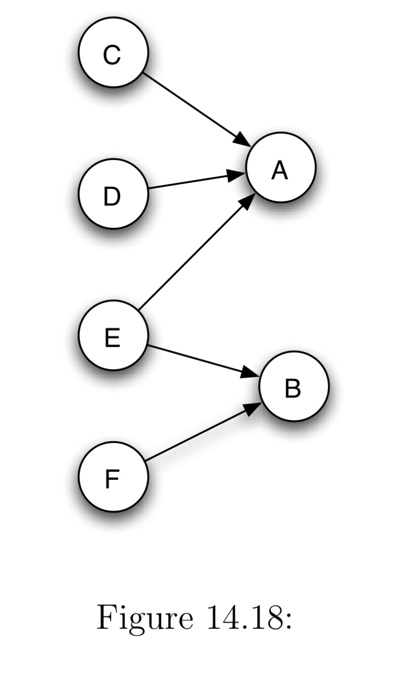 Figure 14.18: Show transcribed image text Figure 14.18:
Expert Answer
Answer to In Chapter 14, we discussed the fact that designers of Web content often reason ex-plicitly about how to create pages th… . . .
OR